3.12.18

Column: Where are the poets, the wild ones?

LOOKING at the Chinese literary scene, one wonders, where are the poets, the non-conformists? Where are, as Kerouac put it, “the mad ones, the ones who are mad to live, mad to talk, mad to be saved”? (Read more here)

Etiquetas: , ,

12.10.16


CHRONICLE on the first-ever Hong Kong Formula E "ePrix"
(...) Overtaking often does not seem to be a product of brave driving, but results of the quantity of battery available. “Piquet Jr. has 42 percent of the battery available while Sam Bird has made a better management of the battery and has 46 percent of battery available,” announced the speaker. The cars don’t race as conventional cars do… Brazilian driver Lucas Di Grassi drove several laps with a broken car nose and didn’t lose a place. Something unthinkable in F1, where speed and aerodynamics go to another level.
Formula E introduced a new lingo to racing. Terms like “energy management” are being heard for the first time. “Energy is quite complicated… they way you utilize to optimize lap time,” Grassi said at the winners’ press conference.
It seems like the drivers are racing like I try to manage the battery of my cellphone.(More here)

Etiquetas: , ,

23.2.16

Welcome to the Year of the Monkey

IN the early hours of the first day of the Year of the Monkey (February 8), I visited the A-Ma Temple and witnessed a memorable moment. The night was misty and there was the occasional sound of firecrackers, which are thought to scare away evil spirits. The square facing the temple was crowded with families coming from their CNY-eve dinners.
People were buying joss sticks, altar candles and pinwheels from the stalls facing the temple and dutifully proceeding inside in order to pray and make wishes for good fortune, prosperity, and wellbeing.
For someone who comes from the West – where religion and superstition nowadays have, let’s say, more contained expressions – it’s puzzling to see grown men and women making their beautiful, newly-bought pinwheels spin around and around in the breeze inside the temple and bowing to the goddess.
Both tradition and faith say that praying brings blessings and that pinwheels may help “to turn one’s luck around,” or turn obstacles into opportunities. That’s why they are a revered symbol during the Spring Festival.
“Pinwheels are made with a number of pinwheels and auspicious elements affixed to a frame. As the pinwheels revolve in the wind, the individual pinwheels secure and multiply the states of being or the spiritual benefits desired by the worshiper. Those who suffer from bad luck, are dissatisfied with their living conditions, or are concerned about family and personal issues, hope to effect a change in their fortunes, or at least, an easing of difficulties, from the good effects of the pinwheel,” explains Janet Lee Scott in her book “For Gods, Ghosts and Ancestors: The Chinese Tradition of Paper Offerings.”
Those who believe in the benefits of the pinwheel are in the realm of magical thought. But who said that allowing ourselves a certain degree of magical thought every now and then is wrong or childish? It was precisely that eruption of tradition and superstition that brought about the fairylike atmosphere at the A-Ma Temple on the first day of the first lunar month.
My foreign eyes see the Chinese New Year as a blend of Christmas and New Year’s Eve. There’s the moment of family reunion, gift exchange (“lai see”), and also the countdown to midnight and passage to another season. There are promises of good luck and well wishes in the air, with cheerful people dressed in their best clothes, celebrating together with their loved ones, making wishes for a better future, shouting “kung hei fat choi!” In the fast-paced world we live in, where so many families are disrupted and greed rules, the brief moment of CNY benevolence is worth all the magical thought.
In Macau, the lunar year started with mixed feelings. On the positive side, the number of tourists who entered the region during the festive week totaled 908,000. The official data released by the Public Security Police Force indicates that this is an increase of 4.7 percent when compared with the 2015 CNY, but my impression when walking downtown is that there have been busier years in the past. Anyway, tourists, especially those from the mainland, still like to visit this “charming and quiet place,” as they say. Time to make a profit while that perception lasts…
The bad news was the fire at the main pavilion of the A-Ma Temple, rightly considered to be one of the city’s top attractions. According to the initial assessment, the damage is not irreversible and the major repair works will be concluded within three months. But those who are prone to the above-mentioned magical thought would certainly say that it is a bad omen for Macau.
(published in MDT)

Etiquetas: , ,

14.2.16

CNY
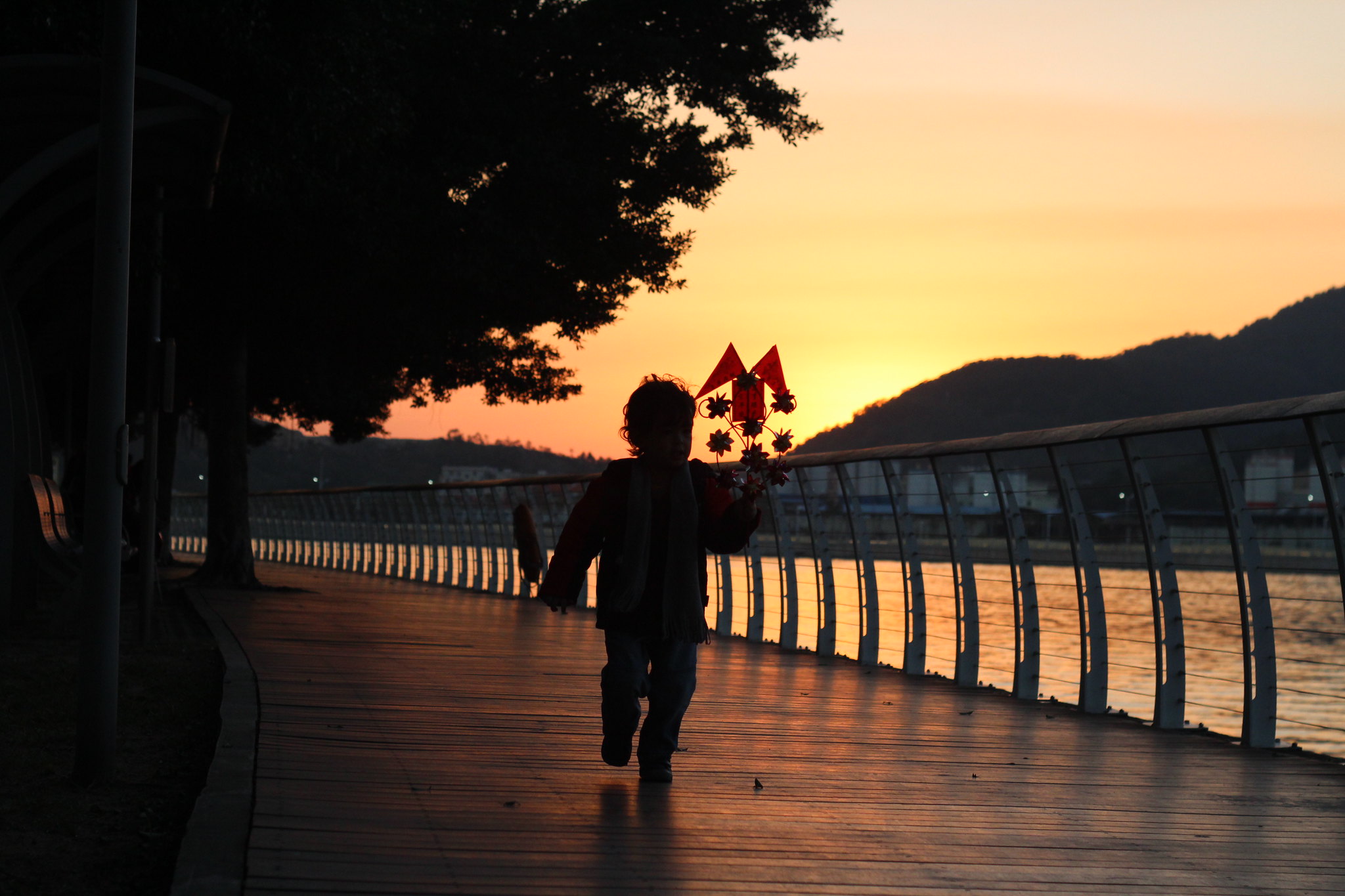
O (meu) menino tentando captar os ventos auspiciosos com o seu moinho de vento de ano novo chinês. Como por aqui se diz, "kung hei fat choi"!

Etiquetas: , ,

19.11.15

MY column this week:
One year after the Occupy movement almost paralyzed Hong Kong as it rallied against electoral system proposals, top representatives of the central government in the neighboring SAR have repeatedly made statements that question the foundations of the “one country, two systems” principle.

All of those statements seem to show an unwillingness from China to develop towards a model that upholds the major provisions of the Basic Law(s) in Hong Kong and Macau, namely the separation of powers (whereby the executive and the judiciary form separate branches), freedom of speech as a basic human right, and the consequent non-criminalization of dissent.
(Read more here

Etiquetas: ,

4.9.15

Understanding the rise of China

SPEAKING at a TED Salon in London, Martin Jacques asks: How do we in the West make sense of China and its phenomenal rise? The author of "When China Rules the World," he examines why the West often puzzles over the growing power of the Chinese economy, and offers three building blocks for understanding what China is and will become.

Etiquetas:

23.12.14

Xi Jinping’s message to Macau


XI Jinping’s visit to Macau to host the swearing- in ceremony of the MSAR’s new government attested again to his popularity in China. According to a recent survey cited by the Washington Post, he may even be the most popular political leader in the world.
The Chinese president ranked first amongst ten leaders studied by Japanese firm GMO’s survey, coming ahead of India’s new prime minister Narendra Modi and German chancellor Angela Merkel.
Of course that popularity can be partly explained by geopolitics, as Anthony Saich, of the Kennedy School’s Ash Center for Democratic Governance, told the Washington paper. According to Saich, citizens in democratic countries, where politics is more contested and the press is free, tend to be more critical of their leaders and policies than in, “those nations where politics is less contested.”


(My column this week, read more here)

Etiquetas: , ,

4.6.14

FABULOUS and newly released documentary about the '89 crackdown as seen by the foreign journalists in Beijing (reported by Mike Chinoy). 

Etiquetas: ,

25 years after, interview with US journalist Mike Chinoy, one of the foreign journalists present at Tiananmen Square when the dramatic events of June 4, 1989, unfolded.

Etiquetas: , ,

16.1.14

HK tb é assim: ""Hong Kong is either heaven or hell depending on who you might ask. It has the [developed] world's highest Gini score with Singapore 2nd and the USA 3rd. Over in Kowloon you'll find so-called 'cage people', residents living in cages or ultra small dwellings, barely able to make ends meet and end up begging in the busy streets or living off meager social assistance if they can get it. Food and rent are expensive so losing a job can be a matter of life and death."

Etiquetas:

13.6.13

NO Western performing group can claim to have had a closer relationship with China than the Philadelphia Orchestra. Certainly not in the 20th century. (good report on the SCMP Sunday magazine)

Etiquetas: ,

3.10.12

Ai Weiwei on china

AFTER being detained without explanation for three months last year, the Chinese artist Ai Weiwei was the subject of an international solidarity campaign. Posters with his picture and the inscription “free Ai Weiwei” became widespread whenever members of the Chinese government attended meetings outside the country. Beijing’s uneasiness dealing in with this case was almost similar to when Chinese dissident Liu Xiaobo won the 2010 Nobel Peace Prize, which he was prevented from receiving personally in Oslo.
The solidarity campaign towards Ai Weiwei was not only international. After Ai’s design company Fake Cultural Development Ltd. was accused of tax evasion – a charge that was interpreted by many as retaliation against his activism – many Chinese supporters sent him money so that he could submit a financial guarantee of USD1.3 million in order to get a review of his case.
He did so, but last week Beijing’s No. 2 Intermediate Court rejected a second and final appeal, ruling that the artist will have to pay over 15 million yuan (USD2.4 million) demanded by tax officials. The artist said he doesn’t intend to pay the fine. Surrounded by journalists outside the court, he made some bold, blatant statements about China’s judicial system. It’s was good to see a man who speaks his mind, although probably what he said was not broadcast in the mainland.
“What surprises me is that this society, which is developing at such a rapid rate today, still has the most barbaric and backward legal system. I think it’s a bad omen,” he said, adding that the authorities denied him his legal rights and failed to follow basic procedures.
Despite having no passport and being barred from leaving the country, Ai Weiwei’s notoriety seems to have gained him the right to speak what he thinks. That’s more than many of his fellow citizens can claim.
Son of Ai Qing, regarded as one of the best Chinese modern poets, the young Ai Weiwei knew the barbaric consequences of Mao’s Cultural Revolution. His father was forbidden to write and exiled to the remote Xinjiang province. That’s where he spent his youth, while Ai Qing was given tasks like cleaning public toilets and had to burn “all his books because he could have got into trouble”. Back in Beijing, he learnt how to draw with some of his father’s friends and immersed himself in Beijing’s repressed art scene. In 1982 he had the opportunity to move to New York, where he befriended artists and poets like the great Allen Ginsberg.
When he returned to China, in 1993, because of his father’s ill health, he was not the same person. He had absorbed the influences of the New York art scene and became one of China’s freest voices. Working with several media, he saw the Internet as a means to artistic expression and opened a popular and short-lived blog where he wrote about everything. Commenting on the English translation of the blog, the art critic Hans Ulrich Obrist says, “It is a book about life and culture in China. It is about love, sex, identity, interviews, food, the tension between history and modernity, Olympics, music, TV, shopping, death, the government, religion, etc. Ai Weiwei has weaved an unbelievable net of thoughts and words.” There are no taboos with Ai Weiwei, that’s why he is a precious thinker and artist.   
Here are some ideas on his blog and China, that he shared with Hans Ulrich Obrist, published in the book ‘Ai Weiwei Speaks’: “I’ve already published over two hundred articles, interviews and writings, commentaries about art, politics, newspaper cuttings, etc., on it. I find that it is the most interesting gift to me, because we live in a society where self-expression is not encouraged and can even damage you, as it has two generations of writers. People are afraid to write anything down; any words put on paper can be used as evidence of a crime.”
(PB, Macau Daily Times)

Etiquetas: ,

12.7.12

THE one week visit to China, Macau and Hong Kong of the Minister of State and Foreign Affairs of Portugal ended yesterday with a visit to the Portuguese School of Macau, where the young students danced and sung for Mr Paulo Portas and his delegation. The minister visited the School’s library and gave a brief speech to the many members of the Portuguese community that attended the event.  He stressed the idea that the visit served to reiterate the “strategic partnership” between Portugal and China,” which he considered “very important” because of the historical links between the two countries and also due to the “modernity facts” that put China as an undisputed world power.
(more)

Etiquetas: ,

18.3.12

OS ENSINAMENTOS DO LUNYU


OS ENSINAMENTOS DO LUNYU[1]

Tradução de Daniel J.L. Carlier
Professor da Escola Luso-Chinesa
Técnico-Profissional de Macau


III. UM IDEAL DE VIDA

I.2. Mestre You disse: “A piedade filial e o respeito pelos mais velhos são as raízes da virtude![1]

XVII.6. Zizhang perguntou a Confúcio como ser verdadeiramente humano. Confúcio respondeu: “No mundo em que vivemos, ser verdadeiramente humano é ser capaz de pôr em prática cinco princípios.” Perguntou-lhe quais eram e Confúcio respondeu: “A deferência, a tolerância, a boa-fé, a diligência e a generosidade.[2]

XIII.19. Fan Chi perguntou como ser verdadeiramente humano. O Mestre disse: “Sendo deferente no dia a dia, diligente no trabalho e leal com os outros.[3]

XII.22. Fan chi perguntou como ser verdadeiramente humano. O Mestre disse: “Amando o próximo[4]

XII.2. Zhonggong perguntou como ser verdadeiramente humano. O Mestre disse: “Não imponha aos outros o que não deseja para si.[5] 

XII.1. Yan Yuan perguntou em que consiste a virtude. O Mestre disse: “A virtude consiste em dominar-se e respeitar os rituais.[6] 

XII.10.  O Mestre disse: “A lealdade, a confiança e a procura da justiça são os caminhos da virtude.[7] 


XIII.27. O Mestre disse: “A firmeza, a perseverança, a sinceridade e a prudência estão próximas da virtude.[8]

XIX.6. Zi Xia disse: “Aumentar os conhecimentos, firmar a vontade, questionar abertamente e reflectir profundamente, é onde se encontra a virtude.[9]

VII.30. O Mestre disse: “Basta querer para ser verdadeiramente humano.[10]

IV.4. O Mestre disse: “Basta ser verdadeiramente humano para não haver maldade![11]

VI.22. O Mestre disse: “A pessoa verdadeiramente humana esforça-se primeiro e mais tarde colhe os frutos; só assim é que se pode dizer que é verdadeiramente humana.[12]

IV.1. O Mestre disse: “É bom viver onde há verdadeiramente humanidade.[13] 

XV.39. O Mestre disse: Quanto ao ensino, é para todos sem discriminação.[14]

VIII.8. O Mestre disse: “A poesia inspira, o ritual educa e a música forma.[15]

VII.25. “Eram quatro os meios de ensino do Mestre: As letras, os actos, a lealdade e a confiança.[16]

VII.20. O Mestre disse: “Eu não nasci sábio, venero os Antigos e cultivo as letras sem descanso.[17]

 IX.4. “Eram quatro as atitudes que o Mestre nunca admitia: As conjecturas, a arbitrariedade, a teimosia e a presunção.[18]

VII.33. O Mestre disse: “Conhecimentos, tenho como toda a gente. Espírito nobre, falta-me muito para ser.[19]

VII.22. O Mestre disse: “As pessoas que caminham pelas ruas têm sempre algo para me ensinar: as suas qualidades servem-me de exemplo e os seus defeitos de aviso.[20]


[1]有子曰孝弟也者其為仁之本與
[2]子張問仁於孔子。孔子曰能行五者於天下為仁矣。請問之。曰:恭,寬,信,敏,惠。
[3]樊遲問仁。子曰居處恭執事敬與人忠。
[4]樊遲問仁。子曰愛人。
[5]仲弓問仁。子曰己所不慾勿施於人。
[6]顏淵問仁。子曰克己復禮為仁。
[7]子曰主忠信徙義崇德也。
[8]子曰訥近仁。
[9]子夏曰博學而篤志切問而近思仁在其中矣。
[10]子曰我慾仁斯仁至矣。
[11]子曰苟志於仁矣無惡也。
[12]子曰仁者先難而後獲可謂仁矣。
[13]子曰里仁為美。
[14]子曰有教無纇。
[15]子曰興於詩立於禮成於樂。
[16]子以四教信。
[17]子曰我非生而知之者好古敏以求之者也。
[18]子絕四毋意毋必毋固毋我。
[19]子曰莫吾猶人也。躬行君子,則吾未之有得。
[20]子曰三人行必有我師焉。擇其善者而從之,其不善者而改之。


[1] O Lunyu é um conjunto de ditos de Confúcio e dos seus principais discípulos.

Etiquetas:

11.3.12

OS ENSINAMENTOS DO LUNYU


OS ENSINAMENTOS DO LUNYU[1]

Tradução de Daniel J.L. Carlier
Professor da Escola Luso-Chinesa
Técnico-Profissional de Macau


II. AS DUAS FACES DA ALMA HUMANA

XIX.7. Zi Xia disse: “Um espírito nobre estuda para encontrar o seu caminho.[1]

XV.21. O Mestre disse: “Um espírito nobre é muito exigente consigo mesmo, um espírito vil é muito exigente com os outros.[2]

IV.24. O Mestre disse: “Um espírito nobre fala com prudência e age com diligência.[3] 

XII.16. O Mestre disse: Um espírito nobre realça as qualidades e não os defeitos dos outros. Um espírito vil faz o contrário.[4]

II.14. O Mestre disse: Para um espírito nobre o interesse particular desaparece diante do interesse geral, para um espírito vil é o interesse geral que desaparece diante do interesse particular.[5]

VI.4. O Mestre disse: “Sempre ouvi dizer que um espírito nobre é uma pessoa que ajuda os pobres a sair da pobreza e não os ricos a tornarem-se mais ricos.[6]

XIV.23. O Mestre disse: Um espírito nobre dá mais valor aos bens espirituais, um espírito vil dá mais valor aos bens materiais.[7]

IV.10. O Mestre disse: “No dia a dia o espírito nobre não é nem rígido nem obstinado, conforma-se com o que é justo.[8]

IV.11. O Mestre disse: “Um espírito nobre espera que haja justiça, um espírito vil só espera obter favores.[9]

IV.16. O Mestre disse: “Um espírito nobre sabe o que é justo, um espírito vil só sabe dos seus interesses.[10]

XIV.27. O Mestre disse: “Muita parra e pouca uva desonra qualquer espírito nobre.[11]

XIII.26. O Mestre disse: “Um espírito nobre tem dignidade mas não é altivo. Um espírito vil é altivo  mas não tem dignidade.[12]
XV.2. O Mestre disse: “Um espírito nobre não sucumbe à desventura.[13]

II.12. O Mestre disse: “Um espírito nobre não é nenhum pote.[14]

III.7. O Mestre disse: “Um espírito nobre não rivaliza com ninguém, a não ser no tiro ao arco![15]

XIII.23. O Mestre disse: “Um espírito nobre procura a harmonia e não o conformismo, um espírito vil procura o conformismo e não a harmonia.[16]

XII.24. Zeng Zi disse: “Graças a sua cultura um espírito nobre junta amigos, graças aos seus amigos torna-se verdadeiramente humano.[17]

VI.27. O Mestre disse: “Um espírito nobre que cultiva as letras e se esforça por cumprir os rituais não se afasta do bom caminho![18]


[1]子夏曰君子學以致其道。
[2]子曰君子求諸己小人求諸人。
[3]子曰君子慾訥於言而敏於行。
[4]子曰君子成人之美不成人之惡。小人反是。
[5]子曰君子周而不比小人比而不周。
[6]子曰吾聞之也君子周急不繼富。
[7]子曰君子上達小人下達。
[8]子曰君子之於天下也無適也無莫也義之與比。
[9]子曰君子懷刑小人懷惠。
[10]子曰君子喻於義小人喻於利。
[11]子曰君子恥其言而過其行。
[12]子曰君子泰而不驕。小人驕而不泰。
[13]子曰君子固窮。
[14]子曰君子不器。
[15]子曰君子無所爭。必也射乎
[16]子曰君子和而不同小人同而不和。
[17]曾子曰君子以文會友以友輔仁。
[18]子曰君子博學於文約之以禮亦可以弗畔矣夫


[1] O Lunyu é um conjunto de ditos de Confúcio e dos seus principais discípulos.

Etiquetas:

4.3.12

OS ENSINAMENTOS DO LUNYU


OS ENSINAMENTOS DO LUNYU

Tradução de Daniel J.L. Carlier
Professor da Escola Luso-Chinesa
Técnico-Profissional de Macau

I. O QUE A VIDA NOS ENSINA (continuação)


XIII.17. O Mestre disse: “A ânsia de pequenos lucros torna impossível a realização de grandes projectos.[1]

IV.2. O Mestre disse:  “Uma pessoa verdadeiramente humana goza tranquilamente a sua humanidade; uma pessoa inteligente põe em prática a sua  humanidade.[2]

V.20. Ji Wen Zi pensava três vezes antes de tomar uma decisão. Quando contaram essa história ao Mestre, ele disse: “Duas vezes devia chegar.[3]

VII.26. O Mestre disse: “Santos, nunca encontrei, mas se encontrar um espírito nobre fico satisfeito.[4]

IV.6. O Mestre disse: “Nunca encontrei ninguém que se dedicasse só ao bem nem ninguém que renunciasse totalmente ao mal.[5]

IX.18. O Mestre disse: “Nunca encontrei ninguém que preferisse a virtude aos encantos da mulher.[6]

XVII.8. O Mestre disse: “O culto da virtude sem a dedicação aos estudos conduz à imbecilidade.[7]

IX.22. O Mestre disse: “Há rebentos que não dão flores e flores que não dão frutos![8]

IX.26. O Mestre disse: “Pode-se privar um exército do seu general, não se pode privar ninguém dos seus ideais”.[9]

I.13. Mestre You disse: “Pode-se confiar nas pessoas que se guiam pela justiça.[10] 

VII.16. O Mestre disse: “Sem a justiça, as riquezas e as honrarias são apenas nuvens no céu.[11]

XV.12. O Mestre disse: “Não pensar no futuro traz dissabores no presente.[12]

III.16. O Mestre disse: “O mais importante no tiro ao arco não é atingir o alvo, pois a destreza dos archeiros difere muito. Era assim que pensavam os Antigos. [13]

VI.29. O Mestre disse: “O princípio -no meio é que está a virtude- é excelente, infelizmente há muito tempo que não é posto em prática![14]

XX.3. Confúcio disse: “Quem ignora o seu próprio destino é incapaz de se tornar um espírito nobre.[15]


VI.17. O Mestre disse: “Alguém é capaz de sair de um sítio sem saídas? Por que razão então querer andar fora do caminho?[1]


[1]子曰誰能出不由戶何莫由斯道也


[1] 子曰見小利則大事不成。
[2] 子曰仁者安仁知者利仁。
[3] 季文子三思而後行。子聞之斯可矣。
[4] 子曰聖人吾不得而見之矣得見君子者斯可矣。
[5] 子曰我未見好仁者惡不仁者。
[6]子曰吾未見好德如好色者也。
[7] 子曰好仁不好學其蔽也愚。
[8] 子曰苗而不秀者有矣夫秀而不實者有矣夫
[9] 子曰三軍可奪師也匹夫不可奪志也。
[10] 有子曰信近於義言可復也。
[11] 子曰不義而富且貴於我如浮雲。
[12] 子曰人無遠慮必有近憂。
[13] 子曰射不主皮為力不同科古之道也。
[14] 子曰中庸之為德也其至矣乎民鮮久矣
[15]孔子曰不知命無以為君子也。


 O Lunyu é um conjunto de ditos de Confúcio e dos seus principais discípulos.

Etiquetas:

Em Macau: Em Lisboa:
www.flickr.com
This is a Flickr badge showing public photos and videos from BARBOSA BRIOSA. Make your own badge here.
Bookmark and Share